
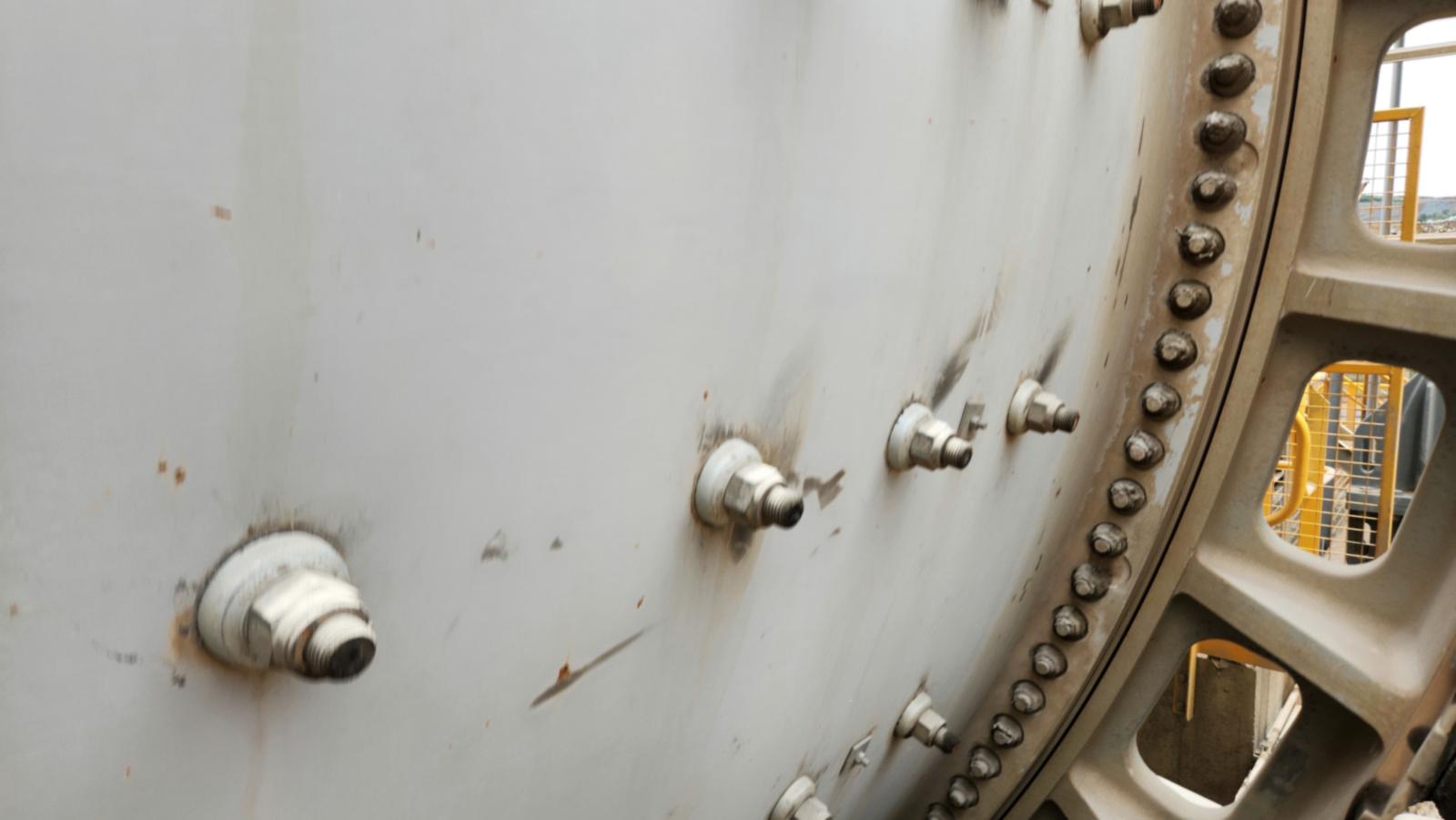
Optimizer for grinding.
Grinding circuit APC for the SAG mill, pebble crusher, ball mill and cyclones. The Optimizer, built on Model Predictive Control, holds the SAG mill at its best load and the cyclones inside their limits, looks half an hour ahead and moves fresh feed, mill speed and water together, so the circuit takes as much ore as it can without overloading. It works with the Rock Analyzer, Sound Analyzer, Fill Analyzer and Charge Manager.
- Your economic objectivethroughput first, or recovery or energy, as you choose
- +1–3% throughputby holding the mill closer to its best load
- 3–8% lower kWh/tsteadier grinding, less energy per tonne
- You stay in controladvice mode first, every loop switched on by your team
The screens below come from ProcessOpt running the Optimizer on a SAG, pebble crusher and ball mill circuit. Tap any screen to open it full size.
Every grinding analyzer, one Optimizer
The Optimizer gets stronger with each signal it sees. Our analyzers each add one that standard instruments do not give:
- Rock Analyzer — feed size on the belt, so feed and water are adjusted before harder or coarser ore reaches the mill
- Sound Analyzer — mill sound from microphones near the shell, the fastest sign that the charge is changing
- Fill Analyzer — total, ball and rock fill and the charge position, so the mill is held where it grinds best, not only at a bearing pressure number
- Charge Manager — the steel charge in the mill as balls wear and are added, so the load targets stay right between top-ups
Together they let the Optimizer run the whole circuit, SAG mill, pebble crusher, ball mill and cyclones, closer to its limits with less risk.
SAG mill optimization toward your economic objective
A stable plant is the starting point, not the goal. You choose what the controller pushes for: usually throughput, but it can be recovery, grind size or energy per tonne. It follows a clear order of priority: equipment and safety limits first, then your quality targets, and every margin left after that goes to the economic objective. When the ore softens, that margin becomes extra tonnes; when it hardens, the controller gives ground without breaking a limit.
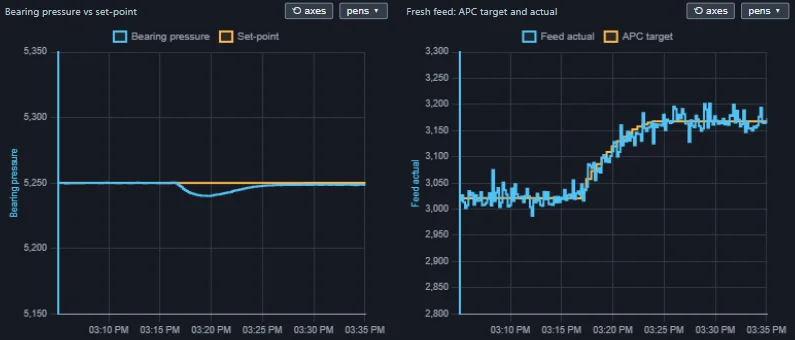
Sees where the circuit is heading
For every variable it looks after, the controller shows the last few minutes and its prediction for the next half hour, against the limits. Your operators see the plan before it happens: how bearing pressure will settle, how close mill power will run to its limit, and which way feed and speed will move to get there.
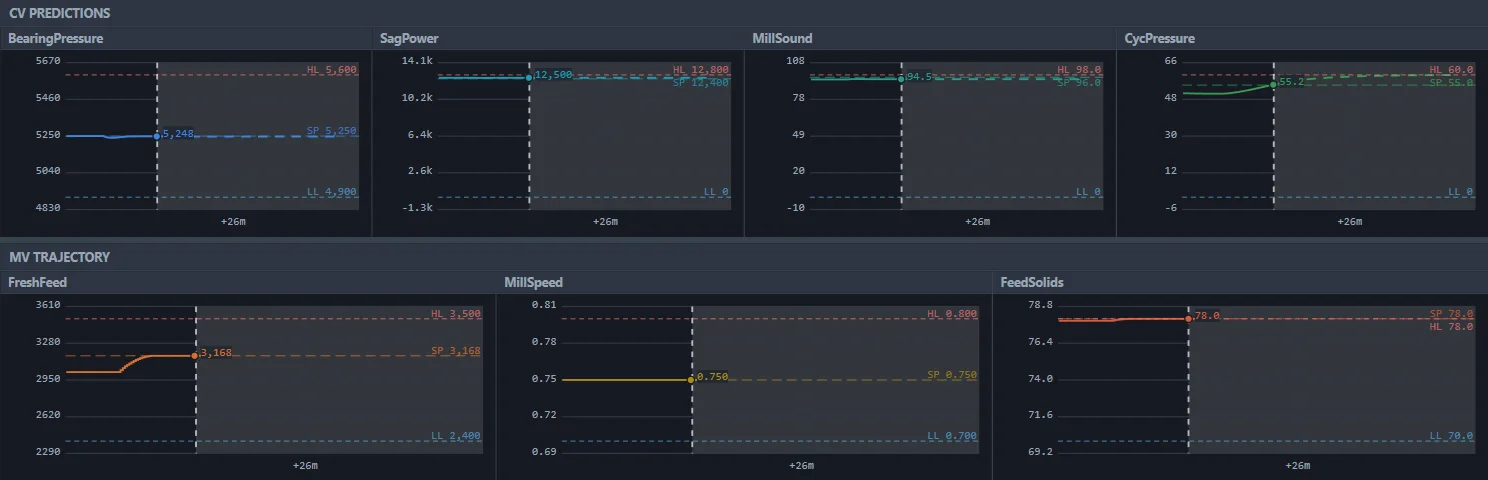
Your targets and limits, in plain view
Your team sets the target and the high and low limits for every variable, and the range each handle may move in. The controller never asks the plant to go outside them. When the shift wants the mill pushed harder or eased off, it is one value to change, and the reason for every move stays visible on the same screen.
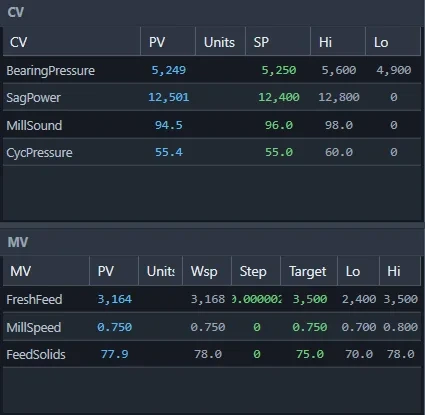
Acts on an ore change before the mill feels it
Feed size from the Rock Analyzer goes straight into the controller. When finer or coarser ore arrives on the belt, the controller adjusts feed and water ahead of the load change, instead of waiting for bearing pressure to drift and then chasing it.

Works through the SAG mill control loops you already have
The Optimizer does not replace your control system. It sets targets for your existing feed, level and density loops, which keep running as they do today. Each loop and the Optimizer itself are switched on separately, so you can start in advice mode, watch the recommendations for a few shifts, and close the loop when your team is ready.

Tuned from your plant’s own history
The models behind the controller are built from your historian data and short, planned step tests, so they describe your mill and your ore, not a textbook circuit. Your engineers review every model before it is applied, and as the ore or the equipment changes, re-tuning is done from fresh data in the same tool.
Where it pays off
- Throughput in grinding — the mill held steadily near its best load instead of behind a wide safety margin, typically +1–3% more tonnes
- Energy per tonne — fewer swings means less energy spent recovering from them, typically 3–8% lower kWh/t, and lower CO₂ per tonne with it
- Ore changes — harder, softer, finer or coarser feed met with a planned response across the plant, not a scramble
- Shift-to-shift consistency — the same good operating strategy on every shift, with your operators deciding the targets
- Grinding media — with the Charge Manager, ball top-ups matched to the steel the mill actually holds
- A better model underneath — with the Digital Twin, the controller also sees values no single instrument measures, such as mill charge and product size
Installation
- Runs on a computer on site, beside your DCS; no cloud connection
- Connects to your DCS or PLC over OPC UA or Modbus TCP, writing targets to your existing loops
- Models built from your historian data and planned step tests, reviewed with your engineers
- Start with grinding and add flotation, thickening, pH, leaching or filtration on the same platform (see the Optimizer overview)
- Advice mode first, closed loop when your team is ready
- A 7-day free trial on your own circuit, so you can judge the results before you commit
Questions about grinding circuit APC
What is SAG mill APC?
Advanced process control for a SAG mill: a controller above the DCS that watches bearing pressure, power, mill sound and feed size together and sets the targets for feed, mill speed and water every minute, to hold the mill at its best load. Ours is the Optimizer, built on Model Predictive Control. It predicts each variable about half an hour ahead and plans its moves inside the limits your team sets.
How does SAG mill control raise throughput?
Without APC, operators keep a wide margin from overload, because nobody can watch the mill every minute. The controller holds the load steadily nearer its best point and uses the margin that remains, so softer ore becomes extra tonnes. The typical gain is +1–3% throughput and 3–8% lower kWh/t. It depends on how variable your ore is and how the mill runs today.
Does APC replace the operator or the DCS?
No. It sets targets for the feed, level and density loops you already have, and they keep running as they do today. It starts in advice mode, and your team switches each loop on when it is ready and can switch it off at any time.
Which instruments does SAG mill optimization need?
Bearing pressure, motor power, mill speed, feed rate and water are enough to start. Feed size from the Rock Analyzer lets the controller act on an ore change before the mill feels it, and the Sound Analyzer and Fill Analyzer add a fast reading of the charge.
How is the controller set up for my mill?
The models are built from your historian data and short, planned step tests, and your engineers review each one before it is applied. A 7-day free trial runs on your own circuit.
See how the Optimizer would run your mill.
Request a demo