
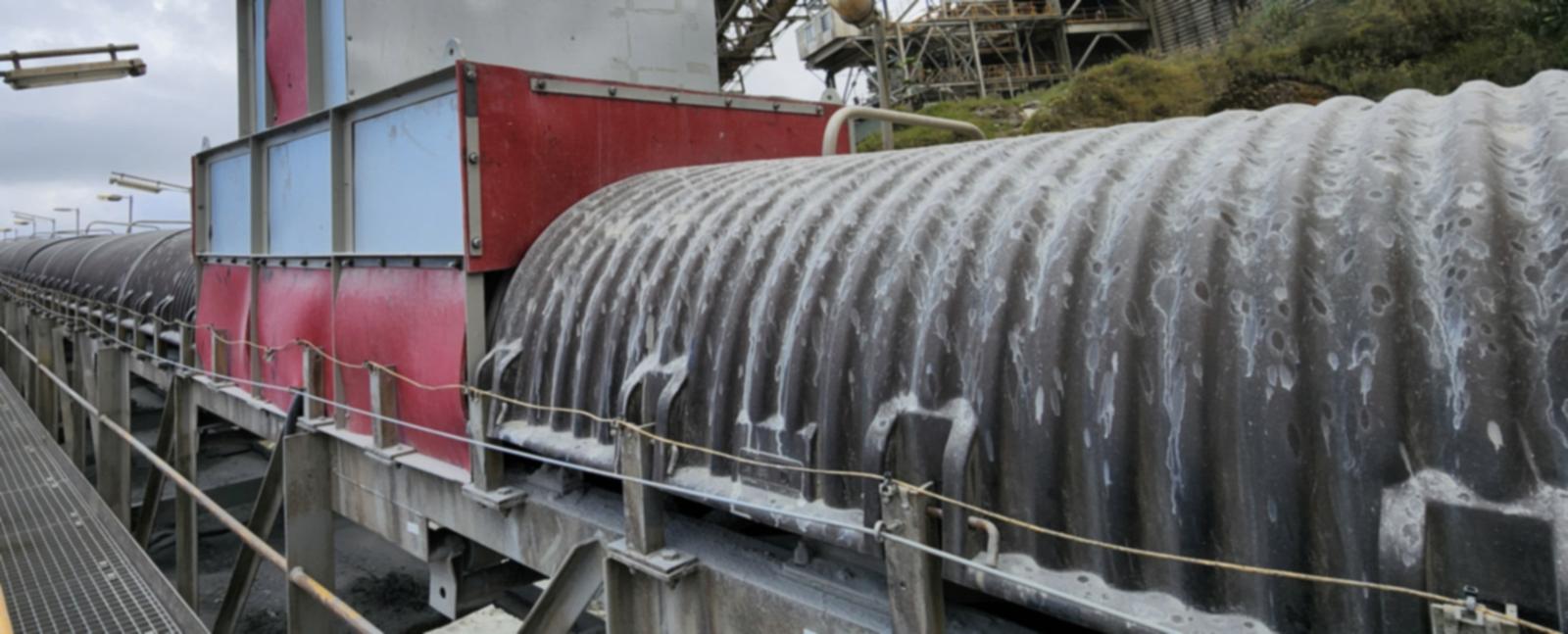
Optimizer.
The Optimizer is our advanced process control for mineral processing plants. Built on Model Predictive Control, it looks half an hour ahead, moves several handles together and works each circuit toward the objective you choose, such as more tonnes, more recovery or less reagent, inside every limit your team sets. It advises your control system and works through the loops you already have, so your operators stay in control.
- Your economic objectivethroughput, recovery, energy or reagent, as you choose
- +1–3% throughputin grinding, by holding the mill closer to its best load
- 3–8% lower kWh/tsteadier grinding, less energy per tonne
- You stay in controladvice mode first, every loop switched on by your team
Where the Optimizer sits in your plant
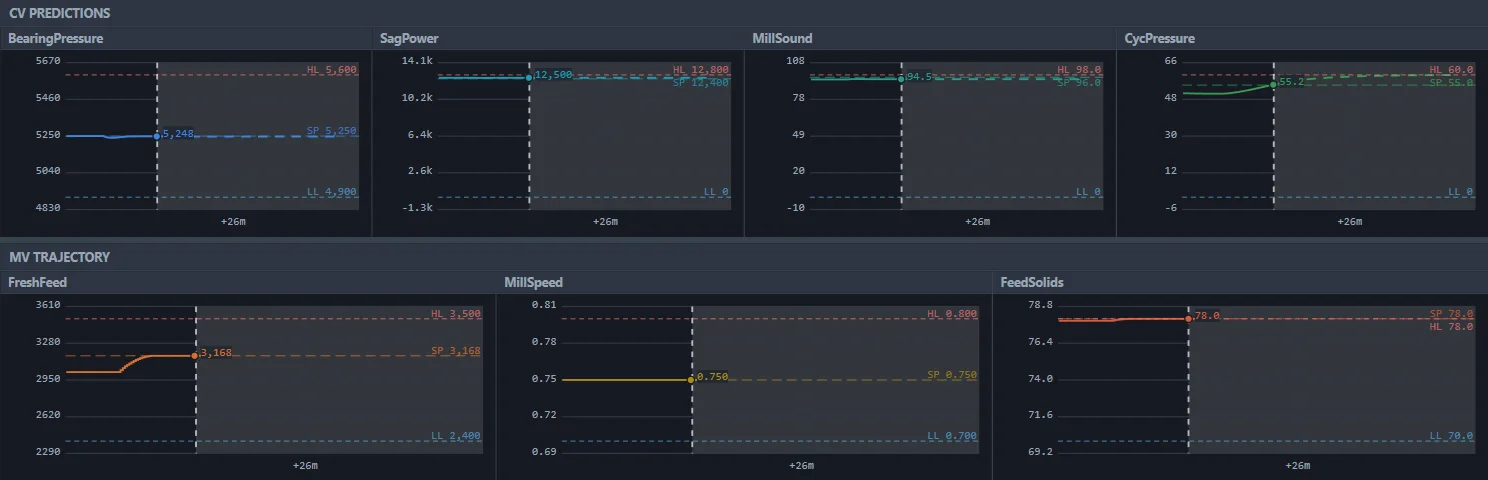
The Optimizer is a layer above your DCS. It reads the plant every cycle, from ordinary flow, level and density measurements and from smart instruments such as the Rock, Froth, Sound and Fill Analyzers. It predicts where each circuit is heading and writes new targets to the loops you already run. Your team sets the limits and the objective, and decides when each loop follows the Optimizer.
One optimizer, six circuits
Every circuit in a concentrator has the same challenge: several handles that affect each other, limits that must not be crossed, and operators who cannot watch everything at once. The Optimizer brings the same screens and the same way of working to each one, with an objective that fits the circuit.
-
01Grinding
SAG and ball mill circuits, with pebble crushing and cyclones.
- Holds
- bearing pressure, mill power, mill sound, cyclone pressure
- Moves
- fresh feed, mill speed, feed water
- Sees early
- feed size from the Rock Analyzer, mill fill from the Fill Analyzer
- Objective
- the most tonnes the mill can take
-
02Flotation
Rougher, scavenger and cleaner banks, bank by bank.
- Holds
- pulp and froth levels, froth speed, mass pull, concentrate grade
- Moves
- collector dosing, air rates, froth depth (level set-points)
- Sees early
- froth speed and bubble size from the Froth Analyzer, feed grade from on-stream assays
- Objective
- the highest recovery at your target grade
-
03Thickening
Tailings and concentrate thickeners.
- Holds
- bed level or bed mass, underflow density, overflow clarity, rake torque
- Moves
- flocculant dose, underflow pumping rate
- Sees early
- feed rate and feed solids
- Objective
- the densest underflow the next step can take
-
04pH and lime dosing
Neutralisation, process water and leach feed conditioning.
- Holds
- pH inside its window, tank by tank
- Moves
- lime dose, in proportion to the feed
- Sees early
- feed pH and feed flow
- Objective
- the least lime that keeps pH in the window
-
05Leaching and CIL
Leach and carbon-in-leach trains.
- Holds
- free cyanide, dissolved oxygen and pH in each tank
- Moves
- cyanide dose, dissolved oxygen set-point, leach feed density, lime addition
- Sees early
- feed rate, feed grade and slurry density
- Objective
- the most gold extracted for the cyanide used
-
06Filtration and tailings
Concentrate filters and tailings disposal.
- Holds
- cake moisture, filter availability, tailings density
- Moves
- filter cycle times, feed density, tailings pumping
- Sees early
- feed rate and solids from the thickener
- Objective
- the most tonnes filtered at the moisture you need
The same screens on every circuit
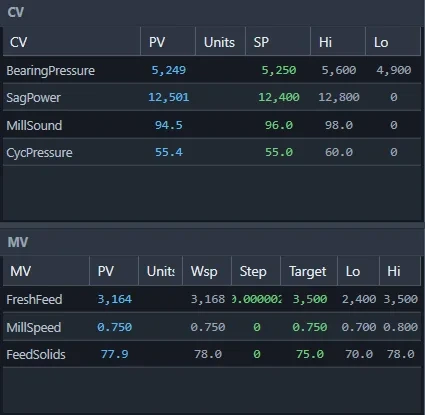
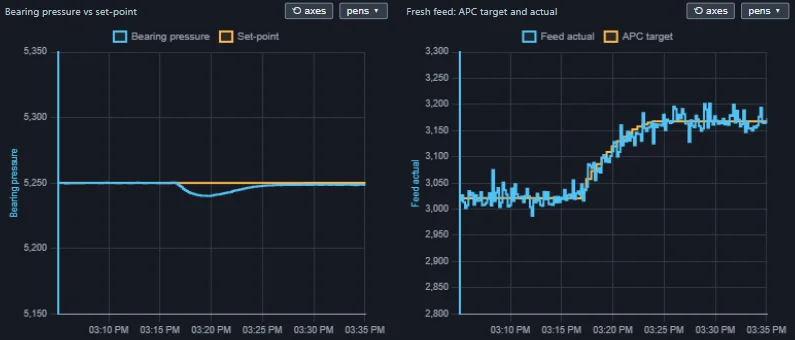
Whatever the circuit, your operators work with the same three views: the targets and limits they control, the prediction of where each variable is heading, and the loops the Optimizer writes to, each with its own switch.

Built on a model of your circuit
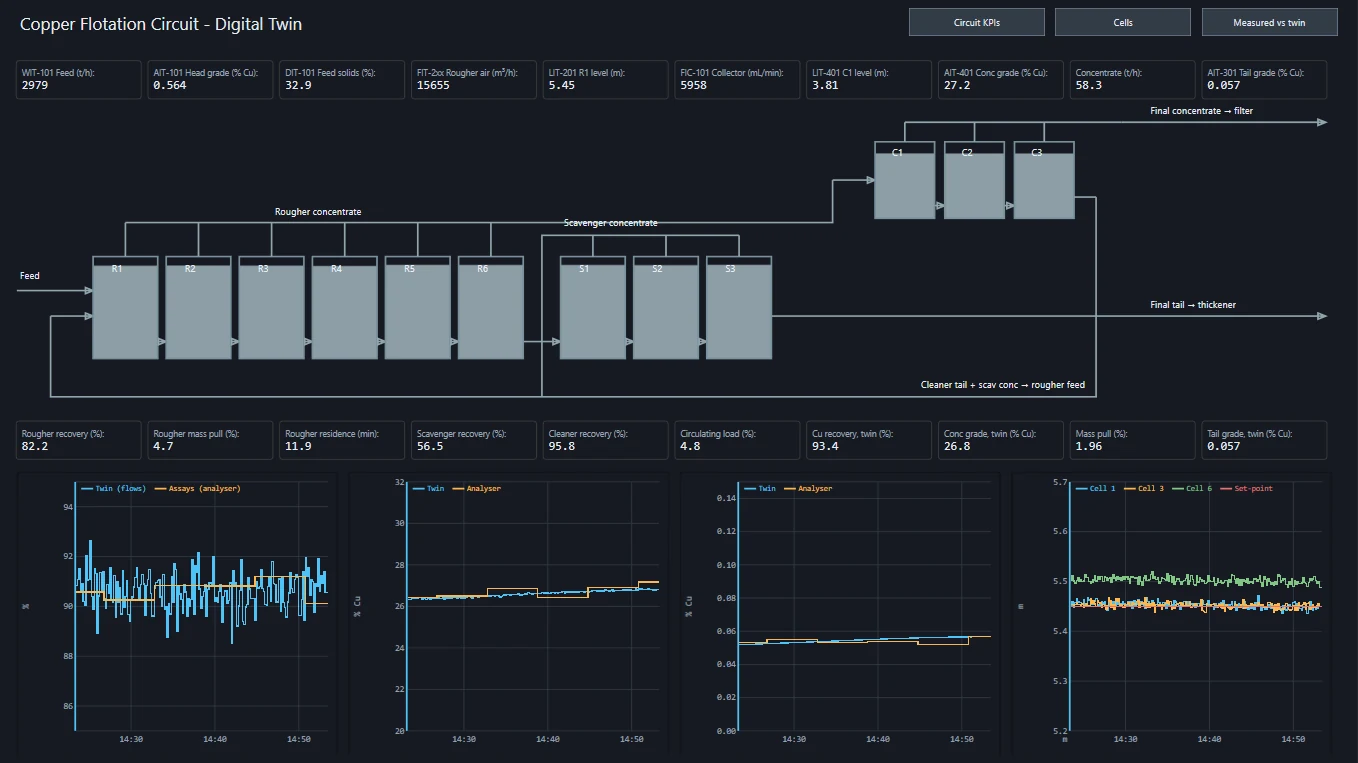
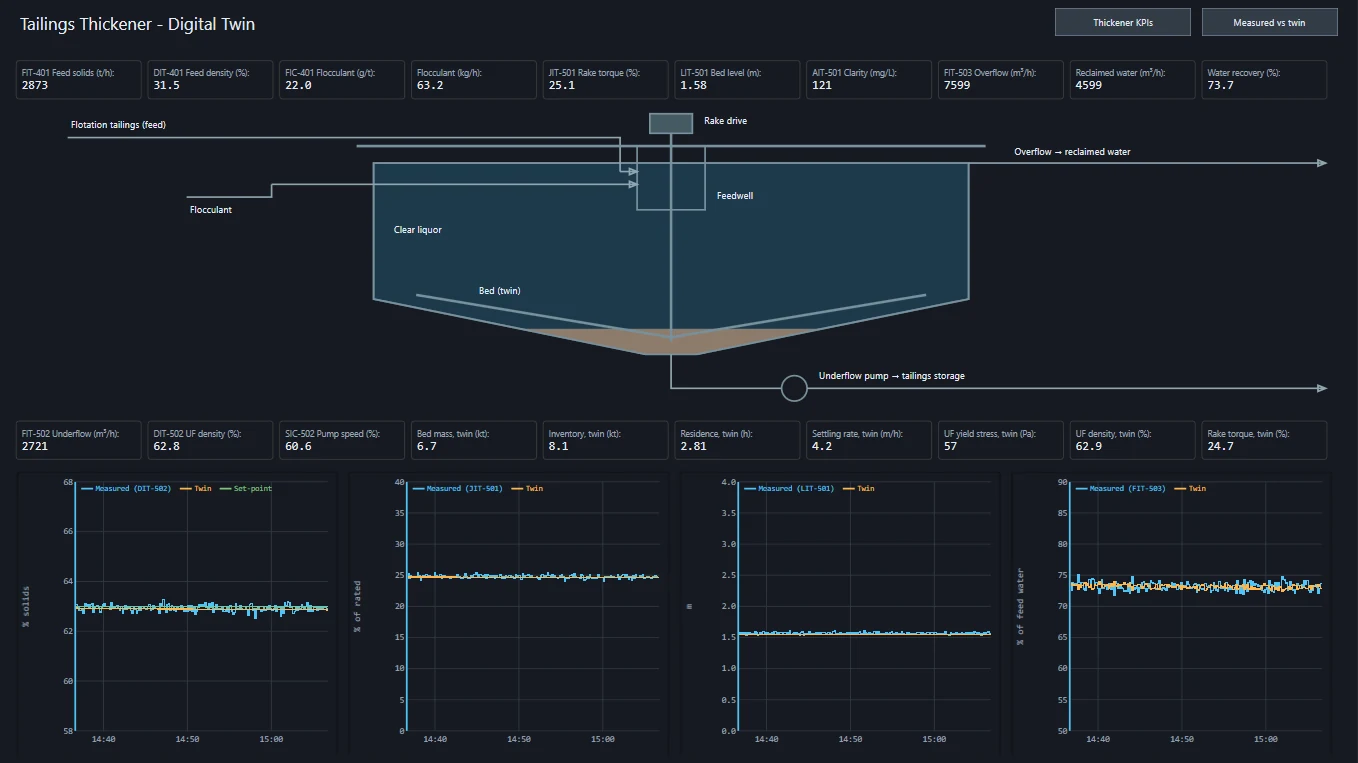
The Optimizer predicts from a model of each circuit, built from your historian data and short step tests, and kept current by the Digital Twin. These are the flotation and thickener models in ProcessOpt that the Optimizer works from on those circuits.
How the Optimizer decides
A stable plant is the starting point, not the goal. Every cycle the Optimizer works through the same order of priority:
- Equipment and safety limits first. Mill power, rake torque, levels and pump limits are never asked to go outside the range your team sets.
- Then your quality targets. Grind size, concentrate grade, pH window, cake moisture.
- Then the economic objective. Every margin left over goes to throughput, recovery, energy or reagent, whichever you chose. When conditions allow, the margin becomes extra production; when they do not, the Optimizer gives ground without breaking a limit.
From first data to closed loop
- Week 1: connect. The Optimizer reads your tags from the DCS, SCADA or historian over OPC UA or Modbus TCP.
- Weeks 2–3: learn the plant. Models are built from your historian data and short, planned step tests, and your engineers review each one. The Optimizer runs in advice mode, so operators see its recommendations without it moving anything.
- Weeks 3–6: close the loop. Your team switches loops over one at a time, when they trust what they have seen.
- Then the next circuit. Most plants start with grinding and add flotation, thickening or reagent dosing on the same platform.
Where it pays off
- Throughput in grinding — the mill held steadily near its best load instead of behind a wide safety margin, typically +1–3% more tonnes
- Energy per tonne — fewer swings means less energy spent recovering from them, typically 3–8% lower kWh/t, and lower CO₂ per tonne with it
- Recovery in flotation and leaching — more metal recovered from every tonne milled, which means less ore mined for each gram of metal
- Reagents with care — lime, cyanide, flocculant and flotation reagents dosed to what the ore needs, not on a wide safety margin
- Water — denser thickener underflow and filter cake, so more process water is recovered and reused
- Shift-to-shift consistency — the same good operating strategy on every shift, with your operators deciding the targets
Installation
- Runs on a computer on site, beside your DCS; no cloud connection
- Connects to your DCS or PLC over OPC UA or Modbus TCP, writing targets to your existing loops
- Works with the instruments you have; smart instruments such as the Rock and Froth Analyzers give it an earlier view
- A 7-day free trial on your own circuit, so you can judge the results before you commit
Questions about the Optimizer
What is advanced process control in mineral processing?
A control layer above the DCS that looks after several variables of a circuit together, predicts where they are heading and sets the targets of the basic loops to keep the circuit inside its limits and close to its best operating point. The Optimizer is our APC, built on Model Predictive Control.
Does the Optimizer replace my DCS or my operators?
No. Your DCS loops keep moving the valves and pumps; the Optimizer only changes their targets. It starts in advice mode, and your team decides when each loop follows it and can switch it off at any time.
Which circuit should we start with?
Usually grinding, because it is the largest energy user and the throughput limit of most plants. Plants with a reagent or recovery problem sometimes start with flotation or pH. The same platform then takes on the next circuit.
Do we need new instruments?
Not to start. The Optimizer works with your existing flow, level, density, power and pH measurements. Smart instruments such as the Rock Analyzer and Froth Analyzer let it act earlier on ore changes.
How do we judge the result?
Compare periods with the Optimizer on and off on the same ore, using your own historian. A 7-day free trial on your circuit is the simplest way to start.
See how the Optimizer would run your plant.
Request a demo