
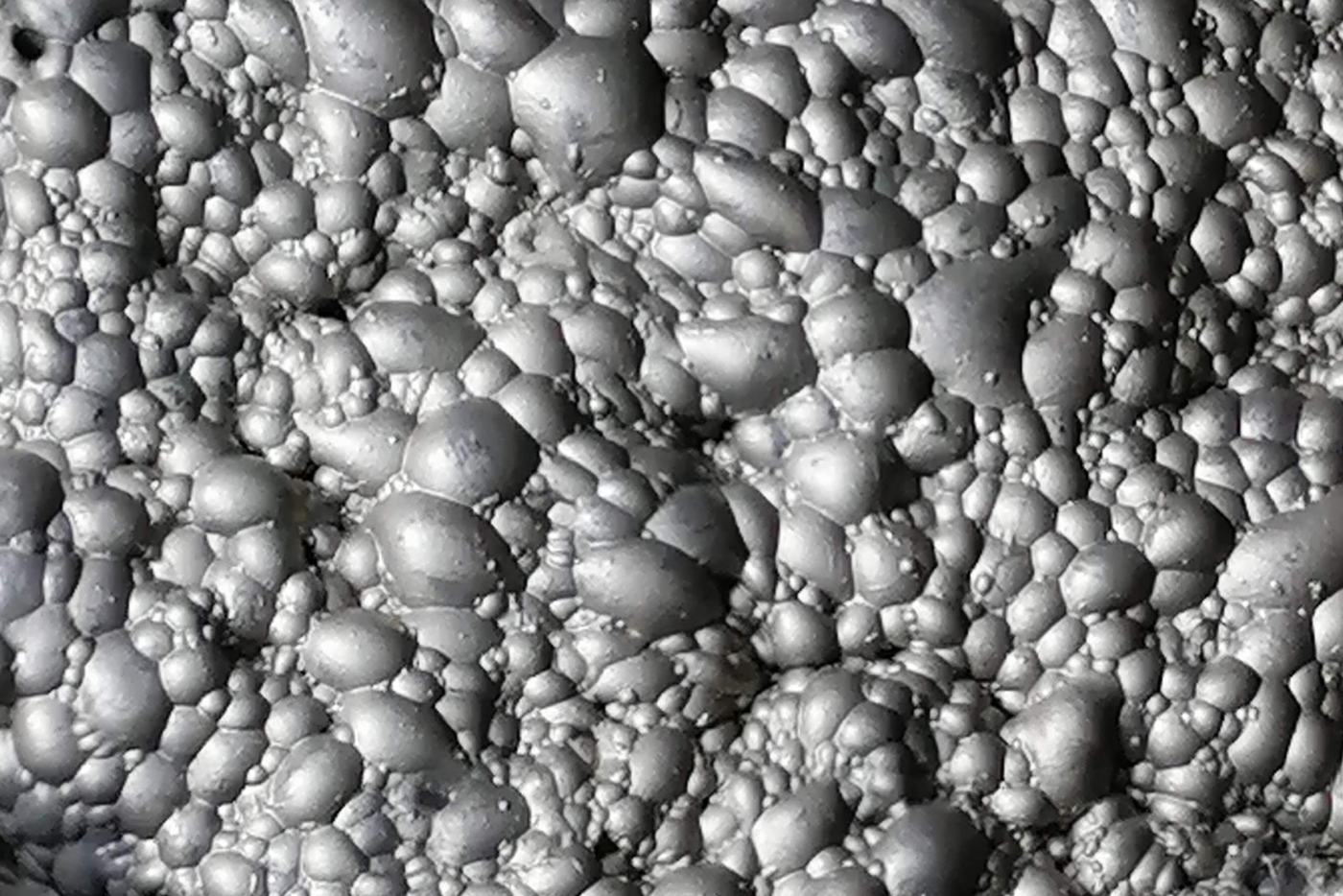
Optimizer for flotation.
Flotation control that keeps the concentrate on its grade spec and recovers more metal from every tonne. The Froth Analyzer measures froth speed on each cell, a froth speed controller trims air and level to hold it, and the Optimizer sets the froth speed and collector targets bank by bank as the feed grade and the ore change.
- Concentrate on specover 90% less time below the grade spec when the ore or head grade changes
- Steadier gradeconcentrate grade swings 62–70% smaller
- More copper recovered+2 to +4 points of recovery
- Less copper to tailingstail grade 20–44% lower
Results from ProcessOpt digital twin trials on a copper flotation circuit of 2,950 t/h, compared with typical control on the same ore. Tap any screen to open it full size.
Three layers, each doing what it does best
- Froth Analyzer — a camera over each cell measures froth speed, bubble size and stability, every few seconds
- Froth speed control — trims air and pulp level on each cell to hold its froth speed target, seconds after the froth changes
- Optimizer — reads the feed and concentrate grade from the on-stream analyser and sets the froth speed and collector targets for the rougher, scavenger and cleaner banks, to hold grade and recover the most metal
Grade on spec when the ore changes
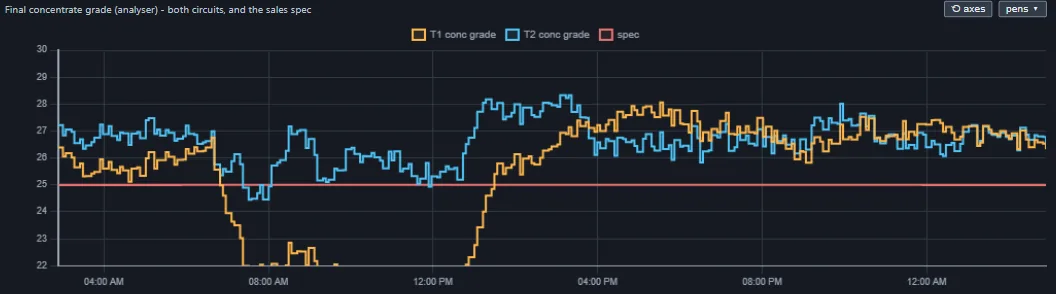
When a harder-to-float ore or a swing in head grade arrives, fixed settings let the concentrate slide below spec until someone acts. The Optimizer moves before the grade crosses the line.
Every move, with its reason
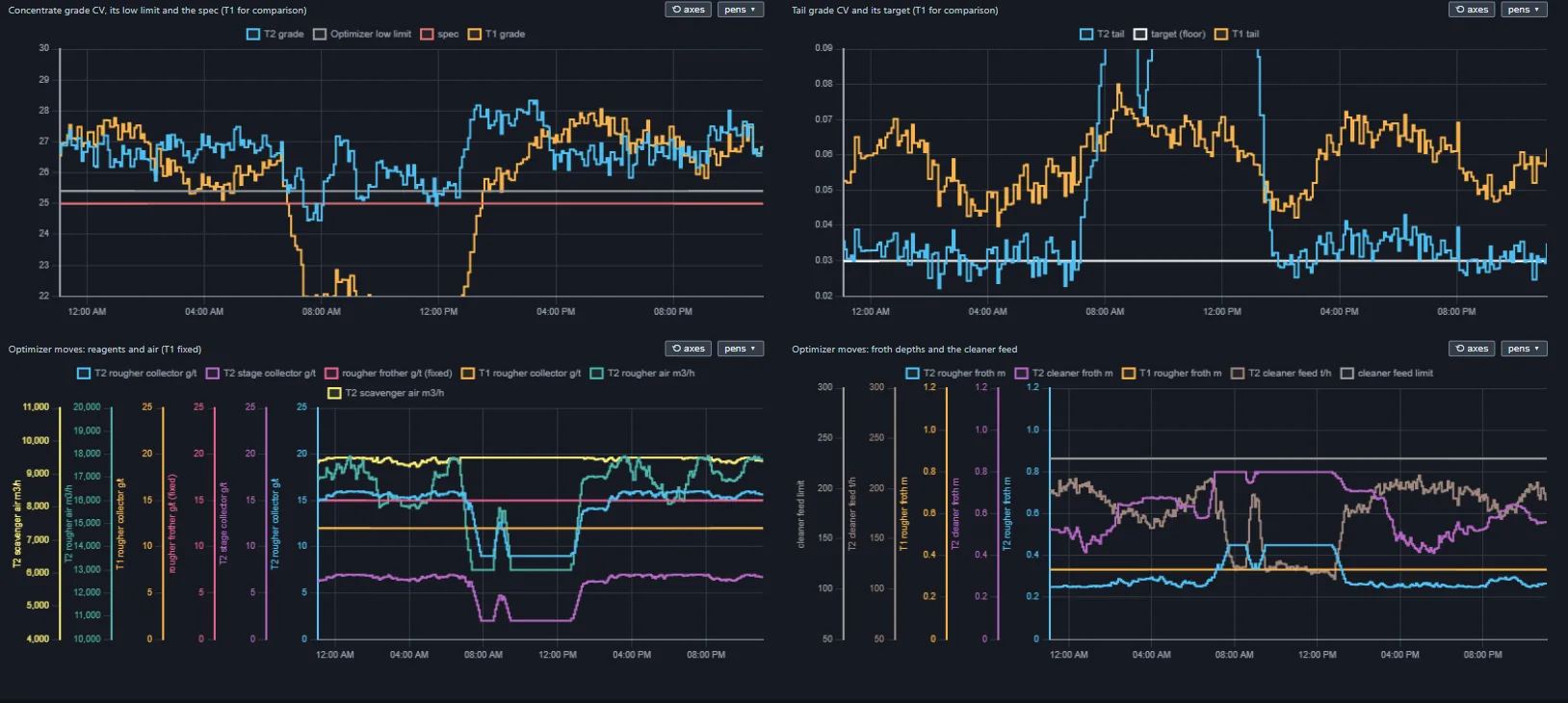
Your team sees the Optimizer’s targets, limits and every move on one page, and sets the reagent and air limits it works inside.
Cell by cell, both circuits
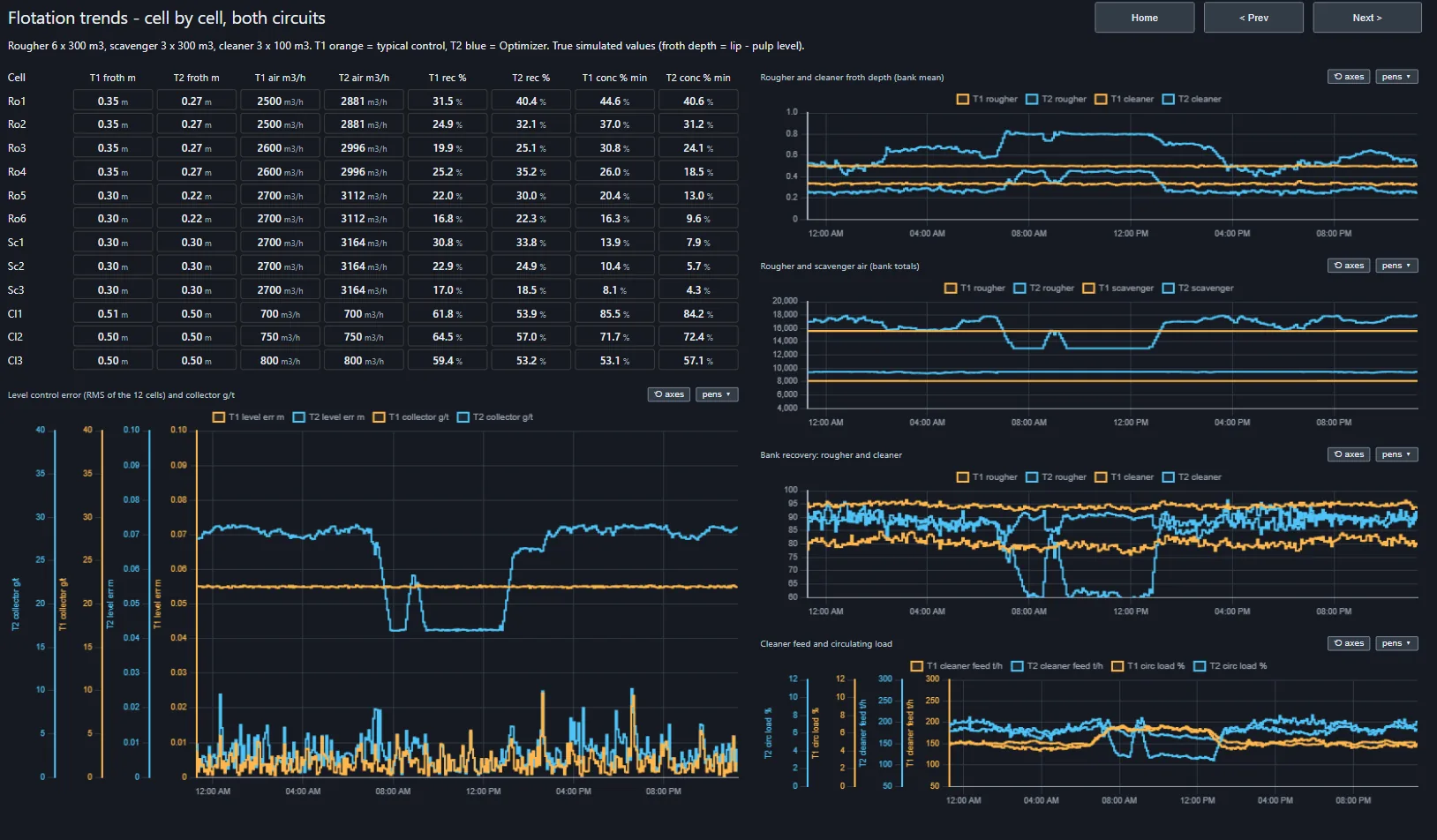
Results
| Case | Recovery: typical / Optimizer | Time below grade spec: typical / Optimizer | Grade swings |
|---|---|---|---|
| Ordinary feed variation | 90.5% / 94.6% | 0% / 0% | about the same |
| Head grade swing of ±20% | 90.5% / 94.6% | 10.1% / 0% | 62% smaller |
| Tonnage 10% higher | 90.4% / 94.6% | 0% / 0% | about the same |
| A day of mixed changes | 89.9% / 91.9% | 24.5% / 1.9% | 69% smaller |
| Slower-floating ore | 89.5% / 86.8% | 49.9% / 3.4% | 70% smaller |
On a slower-floating ore the Optimizer holds the grade spec first and gives up some recovery to do it; your team decides that priority.
Where it pays off
- Concentrate that meets its contract — fewer off-spec lots to blend or explain
- More metal from every tonne — more copper from the ore already mined and milled, and less ore mined for each tonne of copper
- Calmer shifts — operators see the feed change and the reason for every move on one screen
Installation
- Froth Analyzer cameras on the key cells, the on-stream analyser, cell levels and air flows; the Optimizer writes targets to your existing loops
- Runs on a computer on site, beside your DCS, over OPC UA or Modbus TCP; no cloud connection
- Advice mode first, closed loop when your team is ready
- A 7-day free trial on your own circuit
Questions about flotation control
Why control froth speed instead of air and level directly?
Froth speed is how fast concentrate leaves the cell, so it answers within seconds where an assay takes minutes. Holding it with air and level keeps each cell steady, and the Optimizer moves the froth speed targets when the grade calls for it.
Will the Optimizer raise our recovery?
In our tests, by 2 to 4 points in steady ore and through grade and tonnage changes, with the concentrate held on its grade spec.
What does the Optimizer need from our plant?
An on-stream analyser on feed, concentrate and tail, cell levels and air flows, and access to the level, air and reagent set-points. Froth Analyzer cameras add the fast froth speed signal.
See how the Optimizer would run your flotation circuit.
Request a demo